Updated October 10, 2026 · By CharredPicks editors
How to Choose a Pellet Smoker BBQ



How to Choose a Pellet Smoker BBQ
Affiliate disclosure: CharredPicks earns from qualifying purchases via Amazon Associates.
The single most important thing to know about buying a pellet smoker: temperature consistency beats every other spec on the sheet. A grill that holds 225°F steady for 6 hours will produce better brisket than a flashier unit with more cooking area but wild temp swings. Before you look at hopper size, WiFi features, or sear zone claims, understand how a grill manages heat. Everything else is secondary.
Quick Decision Guide
- If you cook for 4 or fewer people regularly, prioritize cooking area between 300 and 500 sq in over anything else
- If you cook long overnight smokes, brisket, pork shoulder, prioritize hopper capacity and PID controller accuracy
- If you want to grill hot and fast as well as smoke low and slow, check the max temp, and look for at least 500°F
- If budget is tight, under $400, focus on controller quality and steel gauge, not extra features
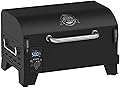
- If you have limited outdoor space or need portability, a tabletop unit like the Pit Boss PB150PPG deserves a serious look
- If you want to smoke indoors without a vent, an indoor-specific unit like the GE Profile Smart Indoor Pellet Smoker is its own category entirely
Temperature Control: The Factor That Makes or Breaks Your Cook
What It Actually Means
Pellet smokers feed compressed wood pellets into a fire pot at a rate controlled by an auger. The controller reads a temperature probe inside the cooking chamber and adjusts pellet feed and fan speed to hold your target temp. Older controllers use simple on/off logic, which causes temps to swing 20 to 30 degrees above and below your set point. PID controllers, Proportional-Integral-Derivative, use a smarter algorithm that reads where the temp is trending and makes small adjustments before an overshoot happens. The difference in practice: a non-PID grill might swing between 210°F and 240°F when you set 225°F. A PID controller typically holds within plus or minus 5 to 10 degrees. Over a 12-hour brisket cook, that variance compounds into real differences in bark and moisture.
The Recommendation
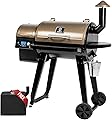
Always buy a PID controller if you can. It's not a luxury feature. Even a budget-friendly unit like the Z Grills ZPG-450A2 with its PID V3.0 controller uses one. If a grill in your price range doesn't specify PID, ask the manufacturer or read the manual carefully. Vague terms like "digital controller" don't mean PID, and owner reviews of non-PID units often mention temperature swings.
Cooking Area: How Much Space Do You Actually Need?
What It Actually Means
Cooking area is measured in square inches and tells you the total grate surface you can use. A full rack of ribs, baby backs, needs roughly 100 to 120 square inches of space lying flat. A 10-pound pork shoulder takes up about 80 to 100 sq in. Most manufacturers give you a total number that combines the main grate and any upper warming rack, but those aren't equal. Upper racks run hotter and have less clearance, so a stated "572 sq in" might actually give you 350 sq in of prime cooking real estate. The Traeger Pro 22 lists 572 sq in total, which is honest but not all equally usable.
For context: 300 to 400 sq in handles a family of four comfortably. 450 to 600 sq in is the sweet spot for entertaining or cooking multiple proteins simultaneously. Above 600 sq in and you're also burning more pellets to maintain temp, especially in cold weather.
The Recommendation
Stop chasing the biggest number. Figure out the largest cook you'd realistically do two or three times a year, plan for that, and don't pay for space you'll heat empty every other weekend. If two racks of ribs and a pork shoulder is your maximum scenario, 450 sq in is plenty.
Hopper Capacity and Pellet Consumption
What It Actually Means
The hopper is the bin that holds unlit pellets, which gravity-feeds into the auger. Hopper size determines how long you can cook without refilling. Pellet consumption varies based on temperature, weather, and grill size. At 225°F in 60°F ambient temps, most mid-size grills burn 1 to 2 pounds of pellets per hour. At 450°F, that jumps to 3 to 4 pounds per hour. A grill with an 18-pound hopper like the Traeger Pro 22 can run approximately 12 to 14 hours at low smoke temps before you need a refill. A 10-pound hopper gets you 6 to 7 hours.
Cold weather significantly increases consumption. A cook at 225°F in 30°F ambient conditions can double your pellet burn rate because the grill works harder to maintain temp.
The Recommendation
For overnight low-and-slow cooks, brisket, whole pork butt, look for at least a 15-pound hopper. For weekend afternoon cooks that wrap up in 4 to 6 hours, 10 pounds is fine. Also check whether the hopper has a clean-out door at the bottom. Swapping pellet flavors mid-session or storing a grill over winter is genuinely painful without one.
Build Quality: What to Look For and What to Ignore
What It Actually Means
Steel gauge and weld quality directly affect how well a grill retains heat and how long it lasts before the fire pot or body rusts through. Most budget grills use 16 to 18 gauge steel for the body. Higher-end units go down to 14 gauge, thicker. Thicker steel holds heat more efficiently and handles thermal cycling better over years of use. Look closely at the lid seal and how tightly it closes. A lid with visible gaps bleeds smoke and makes temp control harder. The fire pot is the highest-wear component and should be heavy-gauge steel, not thin stamped metal.
Wheels, handles, and side shelves are the first places corners get cut on cheaper units. Owners of some grills report the plastic shelf hinge flexes noticeably under a single cutting board. That's fine until you lean on it with a 15-pound brisket dripping juice everywhere.
The Recommendation
Skip the branded thermometer gauge on the lid. It reads dome temperature, which can be 30 to 50 degrees off from actual grate-level temp. Every pellet smoker worth owning comes with a meat probe. Use that and a separate grate probe if you want accurate readings. The lid thermometer is decorative.
The Features That DON'T Matter
WiFi and Bluetooth app connectivity sounds great until you realize you still have to be home to add pellets, open a vent, or baste. The Ninja OG951 Woodfire Pro Connect app is genuinely convenient for monitoring, but it doesn't replace being present. Don't pay a significant premium for connectivity alone.
Number of cooking modes is mostly marketing. "8 in 1" or "7 in 1" labels count bake, roast, braise, and smoke as separate modes. They're all just different temperature targets on the same grill. Focus on whether it reaches the temps you need, high enough to sear, low enough for cold smoking.
Pellet brand compatibility claims are overblown. Any food-grade all-wood pellet works in any pellet smoker. You don't need to buy the manufacturer's proprietary brand.
Decorative smoke stacks and vents on the back or sides look professional but do little if the grill's gasket and overall seal are poor.
Buying Checklist
Before you commit to any pellet smoker, run through this:
- [ ] Does it use a PID controller? Verify this specifically, not just "digital control"
- [ ] What is the actual usable cooking area on the primary grate only?
- [ ] What is the hopper capacity, and does it match your longest planned cook?
- [ ] Does the hopper have a clean-out port at the bottom?
- [ ] What is the maximum temperature? You want at least 450°F for searing, 500°F+ is better
- [ ] What is the minimum temperature? 180 to 200°F minimum is needed for proper smoke production on poultry
- [ ] Does it come with at least one meat probe included?
- [ ] What gauge is the main body steel? Ask the manufacturer if not listed
- [ ] Are replacement parts, fire pots, augers, temperature probes available and reasonably priced?
- [ ] What is the warranty length, and does it cover the controller separately from the body?
- [ ] Does the grease management system drain away from the fire pot? Grease buildup near the fire pot is a common cause of grease fires
- [ ] Is assembly something one person can do, and how many reported assembly issues show up in 1-star reviews?
Frequently Asked Questions
How long does it take a pellet smoker to reach temperature?
Most pellet smokers take 10 to 15 minutes to reach 225°F and 20 to 25 minutes to reach 450°F or higher from a cold start. This is slower than gas but faster than charcoal from scratch. Factor this into your cook timing, especially if you're cooking on a weeknight.
Can pellet smokers produce a real smoke ring?
Yes, but it depends on cook temperature and wood pellet type. Smoke rings form from nitric oxide in wood smoke reacting with the myoglobin in meat. Pellet smokers produce less smoke volume than offset smokers, especially above 275°F. Cooking at lower temps, under 225°F, during the first 2 to 3 hours maximizes smoke penetration. Some grills have a dedicated "super smoke" or low-fan mode that helps.
Do pellet smokers work in cold weather?
They work but perform less efficiently. Below 40°F, pellet consumption can increase by 50 to 100%, and hitting temperatures above 400°F becomes harder. Some manufacturers sell insulated blankets for cold-weather cooking. If you live somewhere with harsh winters and cook year-round, look for a grill with thicker steel gauge and a higher wattage igniter, 60+ watts is better than 40 watts for cold starts.
What wood pellet flavor should I start with?
Apple and cherry are the most forgiving and work well with nearly everything. Hickory is more intense and pairs best with beef and pork. Mesquite is the strongest and easiest to overdo. A sensible starting point is a competition blend, usually a mix of hickory, cherry, and maple, and use that for your first 5 or 6 cooks before experimenting with single-species pellets.
Are pellet smokers actually good for grilling, or just smoking?
It depends on the grill. Most pellet smokers max out between 450 and 500°F, which can produce decent sear marks but won't develop the Maillard crust you get from a 700°F charcoal fire. Some units have a direct flame or open-flame sear option that gets closer. If high-heat grilling is 50% or more of what you'll actually cook, a pellet smoker as your only grill is a compromise. If you mostly smoke and want the option to grill occasionally, it's perfectly capable.
Related Reading
- How to Use a Pellet Grill: Complete Setup Guide
- Best Pellet Grills Under $500
- Charcoal vs Gas vs Pellet: Which Grill Type Is Right for You?
Written by CharredPicks editors. How We Review.
Get Weekly BBQ Tips from CharredPicks
No spam. Just one email a week with grilling tips, recipes, and gear deals.
Products Mentioned
Buy GE Profile™ Smart Indoor Pellet Smoker + Accessories Bundle, Includes Four 1lb Bag, Strainer, 20-pack of Drip Pan Liners, and Prep Tray, Stainless Steel, Carbon Black: Smokers - Amazon.com ✓ FREE DELIVERY possible on eligible purchases