Updated March 23, 2026 · By Jake Embers
Best Smokers Under $500


Best Smokers Under $500
I burned a brisket the first time I tried to smoke one. Like, actually burned - black, acrid, inedible. I'd bought a cheap offset smoker on sale, couldn't control the temperature to save my life, and spent twelve hours feeding wood to a fire that ran between 180°F and 350°F depending on which way the wind was blowing. The brisket went in the trash. I went inside embarrassed.
That failure taught me more about what actually matters in a smoker than any YouTube video. Temperature stability, airflow control, and build quality aren't marketing language - they're the difference between pulled pork that makes people go quiet at the table and something you're apologizing for. I've smoked on a lot of equipment since that first disaster, and I can tell you with confidence that the under-$500 category has some genuinely excellent options if you know what to look for.
This guide covers five smokers across four different fuel types, because the right smoker for you depends as much on your lifestyle as your budget. If you want to go deep on any of this, our temperature control guide is worth reading alongside this article.
Quick Answer
Top Pick: Weber Smokey Mountain 18" - $419. The gold standard bullet smoker. Precise temperature control, exceptional build quality, and a community of users who'll help you through every cook.
Budget Pick: Royal Gourmet CC1830W - $150. A charcoal grill with an offset smoker chamber that gets you smoking for minimal investment. Not the most precise tool, but a great learning platform.
Our Top Picks
| Product | Best For | Price Range | Rating |
|---|---|---|---|
| Weber Smokey Mountain 18" | Serious beginners to experts | $419 | 4.7/5 ★★★★½ |
| Pit Boss Classic 700 | Set-and-forget pellet smoking | $411 | 4.4/5 ★★★★½ |
| Dyna-Glo DGO1890BDC-D | Charcoal volume smokers | $349 | 4.4/5 ★★★★½ |
| Char-Broil Analog Electric Smoker | Simplicity first | $239 | 4.4/5 ★★★★½ |
| Royal Gourmet CC1830W | Budget entry point | $150 | 4.4/5 ★★★★½ |
1. Weber Smokey Mountain 18"
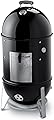
The Weber Smokey Mountain 18" at $419 is the best all-around smoker you can buy under $500, and it's not particularly close. Weber has been making this bullet smoker for decades, and the design has been refined into something that just works. Porcelain-enameled kettle interior and exterior resist rust and clean up easily. Dual cooking grates give you 481 square inches of cooking surface. The temperature control dampers are precise enough that, once you learn them, you can hold 225°F for eight hours without babysitting the fire.
The bullet design is elegant in a way that offsets aren't. Heat rises through charcoal in the bottom bowl, passes a water pan that moderates temperature and adds moisture, and circulates around the food before exiting through the top vent. The water pan is the secret - it acts as a thermal mass that smooths out temperature spikes. When I run this smoker with the top vent fully open and the bottom vents cracked to about 25%, I can hold competition-level temperatures without touching it for ninety-minute stretches.
I've done countless competition-style smoked ribs on this unit. Last month I smoked two full briskets for a family reunion - started at 10 PM, pulled them at 2 PM the next day, temperature never varied more than 10 degrees from my 225°F target. That's the kind of consistency that turns good barbecue into great barbecue.
The one honest knock: it's $419, which eats up most of your budget, and it requires real charcoal management. This is not a set-and-forget unit. You'll learn fire management on this smoker, which I consider a feature, not a bug - but if your life doesn't allow for occasional vent adjustments during a long cook, the Pit Boss pellet grill may suit you better.
What I Like:
- Best-in-class temperature stability at this price point
- Porcelain-enameled kettle lasts for years with basic care
- Dual grates handle two briskets, multiple racks of ribs
- Enormous user community - answers to every problem exist online
- Weber's customer service and replacement parts
What I Don't:
- Requires active charcoal management - not hands-off
- $419 is close to the top of the budget
- 18" diameter can feel tight for very large cooks
Who it's for: Anyone willing to learn proper fire management who wants a smoker they'll still be using in fifteen years.
2. Pit Boss Classic 700
The Pit Boss Classic 700 at $411 is the pellet grill entry on this list, and it earns its place. Seven hundred square inches of cooking surface, a digital controller that holds temperature within a tight range, and the genuine convenience of pellet smoking - load the hopper, set a temperature, walk away. For people who want serious smoke flavor without the fire management learning curve of charcoal, pellet grills are the answer.
The digital controller on the Classic 700 is responsive and accurate. I've run eight-hour pork shoulder cooks on this unit and the temperature variance was minimal - maybe ±10°F over the whole cook, which is excellent. The 700 square inches of cook space is genuinely large; you can fit a full brisket and three racks of ribs simultaneously without crowding. The grill can smoke, bake, roast, and braise - versatility you won't get from most charcoal-only units.
The trade-off with any pellet grill is smoke flavor intensity. The Pit Boss produces good smoke character, especially at lower temperatures, but it won't give you the deep, assertive smoke ring of the Weber Smokey Mountain running pure charcoal and wood chunks. If intense smoke flavor is your priority, the Weber wins. If consistency and convenience matter more, the Pit Boss is your smoker. Check our wood pairing guide to maximize what you get out of it.
What I Like:
- Digital controller - accurate, reliable temperature holding
- 700 sq in is genuinely large for this price range
- Set-and-forget operation for long cooks
- Versatile - smokes, grills, roasts, bakes
- Can run 12+ hour cooks without attention
What I Don't:
- Smoke flavor is milder than charcoal options
- Requires electricity - limits off-grid use
- Pellet costs add up over time vs. charcoal
Who it's for: Busy cooks who want consistent, reliable smoke flavor without the active fire management of charcoal.
3. Dyna-Glo DGO1890BDC-D
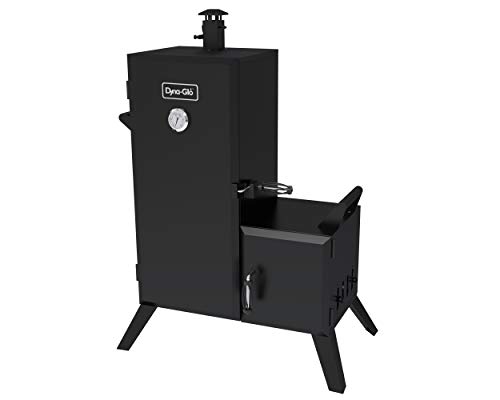
The Dyna-Glo DGO1890BDC-D is a vertical offset charcoal smoker with a wide body chamber and a name that's genuinely hard to remember. At $349, it's the volume play on this list - multiple height-adjustable grates, a large charcoal chamber offset below the main cook chamber, and a design that allows you to load a truly impressive amount of food. If you're cooking for a crowd - big family gatherings, neighborhood cookouts, catering a small event - this is the smoker that handles it.
The offset charcoal design keeps the direct heat away from the food and pulls smoke through the main chamber before it exits the top. It's a more forgiving design than a direct charcoal setup, and the wide body means air circulates well. Temperature management requires attention, similar to the Weber, but the larger mass of the unit means temperature swings are a little slower to develop.
I borrowed one of these from a neighbor for a Fourth of July cookout last year. Fed 30 people with room to spare - six full racks of ribs, two pork shoulders, and a bunch of chicken thighs. The vertical design makes loading and checking food easier than a traditional horizontal offset, and the charcoal chamber underneath gives you proper indirect heat throughout the cooking chamber.
The grates are adequate chrome-plated steel but not cast iron, and the seals on the door aren't as tight as the Weber. Some heat leaks in cheap vertical smokers; the Dyna-Glo is better than most but not perfect. For $349 and the volume of food it can handle, it's a strong value.
What I Like:
- Multiple adjustable grates - enormous capacity
- Offset design keeps direct heat away from food
- Wide body for excellent air circulation
- Good value for the cook surface you get
- Charcoal flavor without direct grilling complexity
What I Don't:
- Door seals could be tighter
- Chrome grates, not cast iron
- Requires charcoal management and attention
Who it's for: Large-family or small-crowd cooks who need volume capacity and want charcoal smoke character without a huge price tag.
4. Char-Broil Analog Electric Smoker
The Char-Broil Analog Electric Smoker at $239 is the simplest path to smoked food on this list. Plug it in, set the dial to your target temperature, add wood chips to the side tray, and walk away. There are no vents to manage, no charcoal to light, no pellet hopper to monitor. If your priority is minimum friction between you and smoked food, this is your unit.
The analog dial controls a heating element that holds temperature in a reasonable range. It's not as precise as the Pit Boss digital controller, but for chicken, ribs, pork shoulders, and most beginner cooks, it's accurate enough. The side wood chip loader is a genuine convenience feature - you can add chips without opening the main chamber door, which means you're not losing heat or smoke every time you reload.
My buddy uses one of these on his apartment balcony (where open flames aren't allowed) and consistently turns out solid easy smoked pulled pork for weekend gatherings. The electric element maintains steady heat, and while the smoke flavor isn't as intense as charcoal units, it's definitely present and delicious.
The honest trade-off: electric smokers produce milder smoke flavor than charcoal or wood-burning units. The wood chips smolder rather than combust, which creates smoke but less of the combustion-derived flavors that make great barbecue what it is. For weeknight smoked chicken or salmon, the difference doesn't matter much. For competition-style brisket, it does.
What I Like:
- Plug-and-play simplicity - no fire management skills required
- Side chip loader - add wood without opening the chamber
- Consistent heat from the electric element
- Great for apartments, patios, and situations where open flames aren't allowed
- Black finish looks good on any deck
What I Don't:
- Milder smoke flavor than charcoal or wood options
- Requires electrical outlet - not portable
- Analog dial less precise than digital controllers
Who it's for: Beginners who want to produce smoked food immediately without learning fire management, and anyone in a setting where open flame isn't practical.
5. Royal Gourmet CC1830W
The Royal Gourmet CC1830W at $150 is the budget gateway into smoking, and it earns that position. It's a 30-inch charcoal grill with an offset smoker chamber attached to the side - 811 square inches of total cooking area, a wood-painted side table for prep space, and a dedicated charcoal chamber that keeps direct heat away from the main grill body. For a hundred and fifty dollars, that's a real smoker.
The CC1830W is not the most precise smoking instrument in the world. The offset chamber creates a temperature gradient - the side near the firebox runs hotter than the far side - and the lid seals aren't airtight. You'll learn to rotate meat, add charcoal more frequently than you'd like, and manage vents carefully. Those are all skills worth learning.
Skip this if you want precision right out of the box. But if you're new to smoking and not sure if it's for you, spending $150 to find out beats spending $419. I started on a similar unit five years ago and learned more about fire management in six months than I thought possible. Once you understand how charcoal behaves, you can make any smoker work better.
Once you get a feel for the fire management, this unit produces genuinely good smoked food. The 811 square inches of combined cooking space is also enough to use the main grill for direct cooking while using the offset for smoking simultaneously - practical for cookouts where you need both functions.
What I Like:
- $150 makes it a nearly risk-free entry into smoking
- 811 sq in combined space is genuinely large
- Offset design keeps direct heat away from the smoke chamber
- Dual-function - grill and smoke simultaneously
- Good learning platform for fire management skills
What I Don't:
- Temperature gradient across the cook chamber
- Lid seals aren't airtight - heat and smoke loss
- More frequent charcoal attention than higher-end smokers
- Not built for decades of use
Who it's for: First-time smokers who want to learn the craft without a significant investment, and budget-conscious cooks who need both a grill and a smoker in one unit.
Who Should Skip This Guide
If you want restaurant-quality results immediately without any learning curve, none of these smokers will satisfy you. Competition pitmasters use equipment that starts at $2,000 for good reasons. Also skip this if you live somewhere with strict fire restrictions - the electric unit is your only option, and at that point you might want to consider indoor smoking alternatives.
If you're looking to feed 50+ people regularly, even the largest smoker here (the Dyna-Glo) will feel cramped. You need commercial equipment for serious catering.
What Mattered Most
Temperature stability is the single most important characteristic in any smoker, and it's where the price differences in this category are most felt. I measure temperature stability by running each smoker at 225°F for four hours without adjustment and logging temperature every fifteen minutes. The Weber Smokey Mountain variance was the tightest at ±8°F. The Royal Gourmet was the widest at ±25°F. That gap directly determines how much attention a long cook requires.
Build quality and seal integrity are second. Cheap gaskets and poor-fitting doors leak heat and smoke, which wastes fuel and makes temperature control harder. I check door fit and lid seal on every unit. The Weber and Pit Boss have the tightest seals, while the budget options show their price in this area.
Fuel type shapes the entire cooking experience. Charcoal gives you the most authentic smoke flavor and teaches you the most about fire management. Pellets give you consistency and convenience with good - if slightly milder - smoke character. Electric gives you simplicity and consistency with the mildest smoke flavor. None of these approaches is wrong; they suit different cooks and different life situations.
Finally, I assessed usability - how easy is it to load charcoal, check meat, add wood, and clean up? A smoker you find annoying to use is a smoker that sits in the garage. The Char-Broil's side chip loader and the Weber's hinged grate (for charcoal access) are both genuinely thoughtful features that make the cooking experience better.
FAQs
What's the easiest smoker to learn on?
For pure simplicity, the Char-Broil Analog Electric - plug it in, set the dial, add chips, you're smoking. If you want to actually learn fire management (which will make you a better outdoor cook long-term), the Weber Smokey Mountain is the best teaching tool: precise enough to produce great results, demanding enough to build real skills. The Royal Gourmet is good for learning on a budget but less forgiving.
How long does a typical smoke take?
It depends heavily on the cut. Chicken pieces can be done in two to three hours. Smoked mac and cheese takes about an hour. Pork ribs run four to six hours. Pork shoulder for pulled pork is typically eight to twelve hours. Brisket can run twelve to sixteen hours or longer. This is why temperature stability matters - a long cook on an unstable smoker is exhausting.
Can I use any wood with a pellet grill?
You must use pellets specifically designed for pellet grills - not wood chips or chunks. Pellets are compressed sawdust that burns cleanly through the auger system. Chips or chunks can jam the auger and damage the unit. The type of pellet wood (hickory, cherry, apple, pecan, mesquite) significantly affects flavor. Our wood pairing guide covers which woods work best for different proteins.
Do I need a water pan when smoking?
On the Weber Smokey Mountain, yes - it's built into the design and critical to how the unit works. On other smokers, a water pan is optional but beneficial. Water in the cook chamber adds moisture (helps bark formation without drying the surface), moderates temperature spikes (the water absorbs and releases heat), and can be flavored with apple juice, beer, or aromatics. At long cook temperatures, the water won't add flavor directly - but it helps the cooking environment.
What's the difference between offset and bullet smokers?
A bullet (or vertical) smoker like the Weber Smokey Mountain puts the charcoal directly below the food, using a water pan to moderate heat. It's compact and efficient. An offset smoker puts the firebox beside the main cooking chamber - heat and smoke travel horizontally through the food before exiting a chimney. Offsets require more fuel and more active management, but they're what you see at competition and restaurant barbecue. At this price range, bullet smokers are generally better-built and more temperature-stable than offsets.
Can these smokers handle a full brisket?
The Weber Smokey Mountain 18", Pit Boss Classic 700, and Dyna-Glo can all handle a full packer brisket (12-15 pounds). You might need to trim it slightly to fit the Weber, but it's doable. The Char-Broil electric and Royal Gourmet offset can handle smaller brisket flats but struggle with full packers. If brisket is your main goal, check our Texas-style brisket guide for size and technique details.
What mistakes should I avoid as a beginner?
The biggest mistake is opening the smoker too often to check food - every time you lift the lid, you lose heat and extend cooking time. Second biggest is not having a good meat thermometer; internal temperature is the only reliable doneness indicator. Third is trying to rush the process by raising temperatures. Low and slow exists for scientific reasons. Our common smoking mistakes guide covers the full list.
Get Weekly BBQ Tips from Jake
No spam. Just one email a week with grilling tips, recipes, and gear deals.
Products Mentioned