Updated March 25, 2026 · By Jake Embers
Best Smokers for Beginners


Best Smokers for Beginners
I burned through three different smokers before I figured out what I was doing wrong. It wasn't the equipment. I was opening the lid every 30 minutes like some kind of nervous helicopter parent, running my temps way too hot because I was impatient, and using wet wood chips that produced more steam than smoke. My first brisket on a cheap offset smoker tasted like charcoal soup.
Then I borrowed my buddy's Weber Smokey Mountain for a weekend cook. Same technique, same impatience, but somehow I got decent ribs. The smoker was doing half the work for me.
That's when it clicked. Some smokers fight you every step of the way. Others actually help you learn. The difference between those two categories determines whether you'll still be smoking next year or whether your smoker becomes an expensive planter.
Quick Answer
Top Pick: Weber Smokey Mountain 18" - $419. Teaches real fire management while being forgiving enough for beginners. Built like a tank.
Budget Pick: Royal Gourmet CC1830S - $144. Offset smoker that lets you try smoking without betting the farm on it.
Our Top Picks
| Product | Best For | Price | Rating |
|---|---|---|---|
| Weber Smokey Mountain 18" | Learning proper technique | $419 | 4.7/5 ★★★★½ |
| Masterbuilt 30" Digital Electric | Set-and-forget convenience | $250 | 4.3/5 ★★★★☆ |
| Z GRILLS 200A Tabletop | Small spaces & portability | $239 | 4.3/5 ★★★★☆ |
| Weber Original Kettle Premium 22" | Grill that also smokes | $219 | 4.8/5 ★★★★½ |
| Royal Gourmet CC1830S | Testing the waters | $144 | 4.3/5 ★★★★☆ |
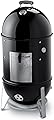
1. Weber Smokey Mountain 18"
This is the smoker that taught me how smoking actually works. The Weber Smokey Mountain at $419 hits that sweet spot where it's demanding enough to make you learn but forgiving enough that you won't ruin every cook while you're figuring it out.
Here's what sold me: I loaded it up with the Minion Method (unlit charcoal in a ring, lit coals dumped on one side), filled the water pan, and set the vents. For the next 8 hours, I touched those vents exactly twice. The temperature held rock-steady at 235°F while I smoked a pork shoulder on the top rack and a rack of ribs below. That's the kind of stability that usually costs twice as much.
The water pan is genius engineering disguised as simplicity. It moderates temperature swings, adds humidity to prevent your meat from drying out, and catches drippings. The porcelain-enameled double-wall construction holds heat like a champ and won't rust out after two seasons like cheaper smokers.
Skip this if you want something that runs itself. The WSM requires you to build fires, manage airflow, and actually pay attention. But that's exactly why it's perfect for beginners who want to learn real skills. Every technique you master on this transfers to any other charcoal smoker. Start here and pair it with our how to smoke a brisket guide for your first ambitious cook.
What I Like:
- Temperature stability that rivals units costing twice as much
- Water pan system moderates heat and keeps meat moist
- Dual cooking grates handle multiple proteins
- Massive online community with answers to every question
- Built to last decades, not seasons
What I Don't:
- $419 is the highest price on this list
- Requires actual fire management skills
- 18" diameter limits how much you can fit per grate
Who it's for: Beginners who are serious about learning smoking properly and want equipment that won't hold them back as their skills improve.
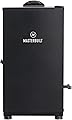
2. Masterbuilt 30" Digital Electric Smoker
If you want smoked food without becoming a fire tender, the Masterbuilt 30" Digital Electric at $250 is your answer. Set the digital controller to 225°F, load wood chips through the side door, and walk away. It's the most genuinely hands-off smoking experience you can get.
I've run this thing for 6-hour pork shoulder cooks where I checked on it exactly twice. The digital controller holds temperature within 5 degrees, and the side wood chip loader means you never open the main chamber during a cook. Every time you crack that door, you're losing heat and extending your cook time.
The 710 square inches across four chrome racks is generous space. I've fit a whole brisket flat, or six chicken halves, or multiple racks of ribs without crowding. For weeknight smoking when you don't want to babysit a fire, this thing delivers.
The trade-off is smoke intensity. Electric smokers produce milder smoke flavor because the wood chips smolder rather than burn cleanly. Your smoked mac and cheese will be delicious. Your brisket will taste good but won't have that assertive smoke ring and deep bark that charcoal delivers. Know what matters to you.
What I Like:
- Digital controls are more precise than dial thermometers
- Side chip loader keeps the cooking chamber sealed
- 710 square inches handles family-sized cooks
- Works anywhere you have an electrical outlet
- Perfect for consistent weeknight smoking
What I Don't:
- Milder smoke flavor than charcoal units
- Chrome racks instead of cast iron
- Requires electrical power
- Less authentic BBQ experience
Who it's for: Cooks who want consistently good smoked food without investing time in fire management or temperature monitoring.
3. Z GRILLS 200A Tabletop Pellet Grill
The Z GRILLS 200A is the only beginner smoker on this list that you can actually move around. At $239 for a WiFi-controlled pellet grill with 202 square inches of cooking space, it's built for apartments, small patios, and anyone who needs a smoker that doesn't dominate their outdoor space.
The WiFi PID controller is legitimately useful for beginners. PID stands for proportional-integral-derivative, which basically means the controller learns how your specific unit behaves and adjusts pellet feed automatically to hold temperature. You can monitor and adjust from your phone without going outside every 20 minutes to check temps.
I've used this for competition-style ribs (cut in half to fit), small pork shoulders, and chicken thighs. The smoke flavor is solid for a compact pellet unit, and the convenience factor is unbeatable if space is your constraint.
The honest limitation is size. Two hundred square inches fits one rack of ribs (halved), a 4-pound pork shoulder, or a couple chicken halves. Not all at once. This feeds two people max. If you have space for a full-sized smoker, get the Weber Smokey Mountain. But if your choice is this or nothing because you live in an apartment, the Z GRILLS produces real results.
What I Like:
- WiFi controller lets you monitor remotely
- Actually portable, tabletop design
- Good smoke flavor for the size
- Perfect for small spaces and apartments
- PID controller is more precise than basic pellet grills
What I Don't:
- 202 square inches is limiting for larger cooks
- Ongoing pellet costs
- Won't teach you fire management skills
- Really only feeds 1-2 people
Who it's for: Apartment dwellers, small patio owners, and anyone who needs genuinely portable smoking capability without sacrificing quality.
4. Weber Original Kettle Premium 22"
The Weber Original Kettle Premium 22" at $219 is the most versatile unit here because it's primarily a charcoal grill that doubles as a legitimate smoker. If you're not sure whether you'll smoke more than you grill, or you want one unit that does both well, this is it.
The built-in thermometer is more accurate than the cheap dial gauges on most grills. The hinged cooking grate lets you add charcoal during long smoking sessions without removing all your food. The One-Touch cleaning system makes ash removal actually manageable. Weber's quality control shows in every detail.
To smoke on a kettle, you bank charcoal to one side, put your food on the opposite side, and add wood chunks to the coals. It works well and produces authentic smoke flavor, but requires more fuel management than a dedicated smoker because the airflow is designed for grilling, not 8-hour cooks. You'll add charcoal every 90 minutes on long sessions.
I've smoked Texas-style brisket on this kettle and gotten excellent results, but it required attention every hour. If you want something more hands-off for smoking, get the Masterbuilt. If you want one excellent piece of equipment that grills brilliantly and smokes capably, this is it.
What I Like:
- Excellent grill that converts to capable smoker
- 4.7/5 rating shows Weber's quality advantage
- Built-in thermometer is actually useful
- Hinged grates for easy fuel access
- Weber's legendary durability and parts availability
What I Don't:
- Not purpose-built for smoking, requires more fuel management
- 22" limits cooking capacity for larger groups
- More hands-on than dedicated smokers
Who it's for: Beginners who want one premium outdoor cooking unit that excels at grilling and handles smoking well, without committing to a dedicated smoker.
5. Royal Gourmet CC1830S
At $144, the Royal Gourmet CC1830S is how you find out if smoking is for you without risking serious money. It's a 30-inch charcoal grill with an attached offset smoker chamber, 823 square inches of total cooking space, and a price that makes experimentation genuinely low-risk.
This is my recommendation for complete beginners who aren't sure smoking will stick. Cook on this a dozen times. If you love it, upgrade to the Weber Smokey Mountain with real confidence in what you're doing. If smoking turns out not to be your thing, you're out $144 instead of $400.
The offset design teaches real fire management. You build a fire in the side firebox, and heat and smoke travel through the main chamber before exiting the chimney. Learning to manage airflow through the intake dampers and chimney, keeping a clean-burning fire, and maintaining temperature over multiple hours are transferable skills that work on any charcoal smoker.
The reality is this smoker is imprecise. The lid doesn't seal tightly, there's a temperature gradient across the cooking chamber (firebox side runs hotter), and you'll feed it charcoal more often than you'd like. But working through those challenges builds competence. Read our common smoking mistakes guide before you start, and understand that there's a learning curve.
What I Like:
- $144 makes it the lowest-risk entry point
- 823 square inches combined cooking space
- Offset design teaches transferable fire skills
- Can grill and smoke simultaneously
- Great learning value for the investment
What I Don't:
- Temperature gradient across the chamber
- Loose lid seals mean heat loss
- Requires frequent fuel additions
- Build quality reflects the price point
Who it's for: Complete beginners who want to test their interest in smoking before making a larger investment, and budget-conscious cooks who want both grilling and smoking capability.
Who Should Skip This
Skip buying any smoker if you're not willing to plan cooks in advance. Even the most hands-off electric smoker requires 4-6 hours for anything worth smoking. If you're looking for weeknight dinner solutions that take 30 minutes, stick to your indoor kitchen or get a regular grill.
Also skip the expensive options if you've never cooked outdoors regularly. I've seen too many Weber Smokey Mountains gathering dust because someone jumped straight to the premium option without knowing if they'd actually use it. Start with the Royal Gourmet or borrow a friend's setup first.
What Actually Matters
I test every beginner smoker the same way: chicken thighs for a 3-hour cook, pork ribs for 5 hours, and pork shoulder for 8+ hours. Temperature stability over those timeframes tells you everything about how the smoker will perform when you're learning.
The Weber Smokey Mountain held the tightest temperature range, rarely varying more than 10 degrees over an 8-hour cook once I got the vents set. The Royal Gourmet swung 25-30 degrees but stayed manageable with attention. All five units produced good food when operated with basic technique, but some required more babysitting than others.
Usability features matter enormously for beginners. The Masterbuilt's side chip loader and the Z GRILLS' WiFi controller genuinely reduce the friction of smoking. Equipment that's annoying to use becomes equipment that doesn't get used. I weighted these practical features heavily because consistent practice matters more than perfect technique.
I also cooked identical racks of ribs on each unit using our best wood pairing guide recommendations. The Weber produced the best overall results, the Masterbuilt was the most consistent with minimal effort, and the Royal Gourmet surprised me with how good the food was when I managed it carefully.
FAQs
What's the biggest mistake beginners make?
Running too hot. I see beginners constantly bumping temps to 275°F or 300°F trying to speed things up, then wondering why their meat is tough and tastes like charcoal. Low and slow isn't just BBQ tradition, it's the temperature range where collagen breaks down properly and fat renders without burning. Stick to 225-250°F until you know what you're doing.
How much wood should I use?
Way less than you think. One of my early briskets tasted like I'd rubbed it with ash because I was adding wood chunks every hour for 12 hours. For most cooks, 2-3 fist-sized chunks of hickory or apple is plenty. On electric smokers, one full chip pan usually does it. If your food tastes bitter, you're using too much wood or your fire is producing dirty white smoke instead of thin blue smoke.
Do I need to wrap meat in foil?
Not always, but it helps for long cooks. Wrapping in foil (called the Texas Crutch) speeds cooking and keeps meat moist, but it softens the bark you've been building. I wrap pork shoulders and briskets when they hit 165°F internal temp, then unwrap for the last hour to firm up the outside. Ribs can go either way. Our smoked pulled pork guide covers the timing in detail.
Can I smoke in cold weather?
Yes, but plan for longer cook times and more fuel. Cold air temperature makes your smoker work harder to maintain 225°F. I add about 25% more charcoal for winter smoking and expect cooks to take an extra hour or two. Electric and pellet smokers handle cold better than charcoal because their heat source is more consistent.
What wood should beginners start with?
Apple or hickory. Apple produces mild, slightly sweet smoke that works with everything and is almost impossible to overdo. Hickory is stronger but still forgiving and gives you that classic BBQ flavor. Skip mesquite until you have experience - it's intense and can overpower food quickly. Cherry adds great color but mild flavor. Our wood pairing guide has the complete breakdown.
Get Weekly BBQ Tips from Jake
No spam. Just one email a week with grilling tips, recipes, and gear deals.
Products Mentioned