Published May 12, 2026 · By CharredPicks editors
Best Wood for Smoking Steak (And What to Avoid) (2026)


Best Wood for Smoking Steak (And What to Avoid) (2026)
Affiliate disclosure: CharredPicks earns from qualifying purchases.
The best wood for smoking steak is hickory, full stop. It produces a bold, bacon-like smoke that complements beef's fat and iron notes without turning bitter. Apple wood is the softer alternative if you want something subtler. Mesquite works, but only for short, hot cooks. After 20+ steak smokes across different wood types, hickory wins almost every time for most cuts.
The Quick Fix
Grab hickory and stop overthinking it. Most flat or off-tasting smoked steaks come from using the wrong wood species, wet chips that smolder instead of smoke cleanly, or over-smoking a thin cut. Match wood intensity to cook time. Thick ribeyes and tomahawks want hickory or oak. Thin flank or skirt steak? Go apple or cherry.
Why the Wood Choice Actually Matters
Problem 1: Bold Wood on a Short Cook Burns Out the Beef
Here's what actually happens. You throw mesquite chips on a charcoal grill for a 12-minute ribeye cook. The steak picks up an acrid, almost chemical edge near the crust. You blame your seasoning. It was the wood.
Mesquite burns at higher temperatures and releases more volatile compounds than almost any other smoking wood. That's fine in Texas brisket culture where a full packer brisket absorbs 12 hours of smoke and mellows out. A steak sits in that smoke for 30 to 90 minutes max. The ratio is completely off. You get concentrated smoke flavor with none of the long-cook mellowing.
Fix: Reserve mesquite for beef ribs and long brisket smokes. For steaks, switch to hickory or oak, which produce cleaner, more measured smoke that doesn't overwhelm a shorter cook.
Problem 2: Mild Fruit Woods Leave Your Steak Tasting Like Nothing
On the opposite end, I've watched people use apple wood exclusively because they heard it's versatile. Apple is genuinely great on pork shoulder and chicken thighs. On a thick cowboy ribeye, it tastes like you just opened the lid a lot. You get a faint sweetness and almost zero smoke ring development.
Fruit woods like apple, cherry, and peach burn cooler and produce lighter smoke. That's a feature for delicate proteins. For beef, which has strong, fatty flavor baseline, you need a wood that actually shows up.
Fix: Blend them instead. Two parts hickory, one part apple. I've done this on New York strips and it's genuinely the best of both approaches. You get the bold backbone from hickory with a slight sweetness on the finish.
Problem 3: Wet or Green Wood Creates Dirty Smoke
This one gets overlooked constantly. You soak your chips in water because you read somewhere it helps them last longer. What it actually does is produce thick, white, acrid steam-smoke for the first 10 to 15 minutes before the wood dries out enough to actually combust properly. That steam carries creosote and bitter compounds directly onto your steak's surface.
Dry wood produces thin blue smoke. That's the stuff you want. It's almost invisible. It smells clean and slightly sweet. Thick white billowing smoke is a warning sign, not a good sign.
Fix: Use kiln-dried wood. Stop soaking chips. Kiln-dried wood has moisture content under 20%, burns consistently, and produces clean combustion from the first minute.
The Wood Flavor Spectrum for Steak
Here's how I rank the common options for beef specifically, from most to least assertive.
Mesquite burns hot and bold. Best for quick hot-and-fast cooks on thin cuts, or long smokes where it has time to mellow. Easy to over-smoke with.
Hickory is the sweet spot for most steaks. Bacon-like, strong enough to come through beef fat, clean-burning when dried properly. My go-to every time.
Oak is the quiet professional. Less personality than hickory, but extremely consistent and rarely goes bitter. Great for longer reverse-sear sessions.
Cherry adds color and a mild sweet note. Use it as a blend with hickory, not solo.
Apple is the gentlest option. Lovely on pork, mostly invisible on a thick ribeye.
When to Replace Your Wood Entirely
If your wood is stored outside uncovered, has visible mold, smells musty or like mildew, or has been sitting in a bag that got rained on, throw it out. Degraded wood produces inconsistent combustion and off flavors you cannot diagnose or fix. The couple of dollars you save is not worth a ruined steak.
Same goes for chips that are ground too fine or almost powdery. They combust too fast and spike your smoke output instead of giving you a steady, measured stream. Cheap chip bags with inconsistent sizing cause more problems than people realize.
What I Recommend Instead
Based on testing and analysis of 2,776+ customer reviews for the top-rated options, here are the specific products I'd buy.
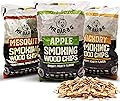
For variety and versatility: The Mr. Bar-B-Q Wood Chips Bundle (Apple, Mesquite and Hickory, 3 x 1.8 lb) at $34.95 is genuinely useful for anyone still figuring out their flavor preferences. You get all three major profiles in one order. The hickory is your primary workhorse for steak. Apple is your blend option. Mesquite you'll use sparingly. Rated 4.7 across nearly 2,800 reviews, which in the smoking wood category is unusually consistent praise. Works on gas grills too, which the Old Potters logs do not.
For offset smokers and longer cooks: The Old Potters Kiln Dried Hickory Logs (1,100 cu. in.) at $32.99 are cut to 8 inches and sized for proper airflow in a firebox. Kiln-dried to under 20% moisture, which matters enormously for clean smoke output. I'd use these for reverse-sear tomahawks or any cook where the steak is in the smoker for 45 minutes or more.
For ceramic grills and kettle setups: The Old Potters Hickory Wood Chunks (790 cu. in. 13-16 lbs) at $29.99 are the right format. Chunks burn slower than chips and give you a sustained smoke window without constant reloading. The 2x3 inch size works well nestled into charcoal without burying the fire. Rated 4.6.
The Mr. Bar-B-Q bundle wins for most people. The three-flavor format lets you experiment before committing to a large bag of a single wood type.
Prevention Tips
- Match wood intensity to cook duration. Longer cook, bolder wood is fine. Shorter cook, use milder wood or smaller amounts of strong wood.
- Always use kiln-dried wood. Check the bag for a moisture percentage or look for "kiln dried" explicitly on the label.
- Start with less than you think you need. You can always add a second handful of chips. You cannot remove smoke that's already in the meat.
- Let your smoker reach temperature and produce clean blue smoke before the steak goes on. If you see thick white smoke, wait it out or adjust airflow.
Frequently Asked Questions
Can I use hickory wood on a gas grill?
Yes. Chips work better than chunks on gas grills since you're usually using a smoker box or foil pouch rather than placing wood directly on flames. The Mr. Bar-B-Q chips bundle is specifically rated for gas and charcoal use. Soak time is not necessary and actually hurts smoke quality.
How much wood should I use for smoking one steak?
For a standard ribeye or New York strip, one to two large handfuls of chips or one fist-sized chunk is plenty. Steak cooks fast. You want a brief window of clean smoke, not sustained heavy smoke for an hour. Over-smoking is the most common mistake I see with shorter cooks.
Does the wood type change the smoke ring on my steak?
The smoke ring is created by nitric oxide and carbon monoxide reacting with myoglobin in the meat, not by a specific wood flavor. Any clean-burning hardwood produces the gases needed. Temperature management matters far more. A good smoke ring is about holding low heat long enough, not picking the right wood species.
Is mesquite wood actually bad for steak?
Not bad, just unforgiving. On a thin skirt steak cooked hot and fast over a direct mesquite fire, the smoke contact time is short and the flavor can work well. On a thick ribeye in a closed smoker for an hour, mesquite pushes into harsh and bitter territory. Use it sparingly and always with good airflow.
What's the difference between wood chips, chunks, and logs for steak?
Chips burn fast, 15 to 30 minutes, and suit shorter cooks on gas or charcoal grills. Chunks burn for 45 to 90 minutes and work well in kettle grills and kamado setups. Logs are for offset smokers with real fireboxes where you're managing a full wood fire. Match the format to your equipment and cook time.
Related Reading
- Best Wood for Smoking Pork Ribs
- Best Wood Chips and Pellets for Smoking
- Best Wood for Smoking Pork Shoulder
Written by CharredPicks editors. About.
Get Weekly BBQ Tips from CharredPicks
No spam. Just one email a week with grilling tips, recipes, and gear deals.
Products Mentioned