Updated October 7, 2026 · By CharredPicks editors
Best Wood for Smoking Beef Ribs: Hickory, Oak or a Cherry Blend

Best Wood for Smoking Beef Ribs: Hickory, Oak or a Cherry Blend
Affiliate disclosure: CharredPicks earns from qualifying purchases.
Hickory is the best all-around wood for smoking beef ribs. Its strong, savory smoke stands up to the fat and thick meat of beef ribs, especially big plate ribs. Oak, and post oak in particular, is the cleaner and more forgiving choice and the one to start with if you are new to beef ribs. Cherry is too mild alone, but one part cherry to two parts hickory adds a deep red bark. Keep mesquite to a small share of the wood, and skip apple on its own: its sweetness gets lost on beef.
Best Woods for Beef Ribs at a Glance
| Wood | Smoke | Use on beef ribs |
|---|---|---|
| Hickory | Strong | The main wood, especially for plate ribs |
| Post oak | Medium, clean | The forgiving choice; good for back ribs |
| Cherry | Light | One part to two parts hickory, for color |
| Mesquite | Very strong | A quarter of the wood at most |
| Apple | Light | Too mild alone for beef |
What to Buy
- Old Potters Hickory Chunks: kiln-dried 2 by 3 inch hickory chunks in a 790 cubic inch box, for kettles, kamados and offset smokers. Rated about 4.6 out of 5 from under 200 ratings.
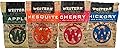
- Western Variety Pack: hickory, cherry, apple and mesquite chips, the easy way to try a hickory and cherry blend. Rated about 4.7 out of 5 from more than 10,000 ratings.
- Mr. Bar-B-Q Chips 3-Pack: three 1.8 lb bags of hickory, mesquite and apple chips for gas and charcoal grills. Rated about 4.7 out of 5 from more than 3,000 ratings.
How to Smoke Beef Ribs, Step by Step
Step 1: Match the wood form to your cooker
Chips burn in about 20 to 30 minutes and suit gas grills with a smoker box and short charcoal cooks. Chunks burn for roughly 45 to 90 minutes each and suit kettles, kamados and offset smokers. Pellet grills take pellets only: use hickory or a hickory blend.
Step 2: Choose the wood for the cut
Plate ribs (the big "dino ribs" from the lower rib cage) are thick and heavily marbled and take 6 hours or more. They can carry a strong smoke: hickory, or about 70 percent hickory and 30 percent cherry.
Back ribs (the bones left when the ribeye is cut away) have less meat between the bones and finish in about 4 hours. Use a lighter hand: straight oak, or hickory and oak half and half.
Step 3: Do not soak the wood
Soaked wood steams before it smokes. That steam adds no flavor and lowers the cooker temperature. Put dry chunks straight on the coals or in the firebox.
Step 4: Add the wood once the cooker is stable
Wait until the cooker holds 225 to 275°F. On a kettle or offset, start with 2 chunks and add one more every 60 to 75 minutes for the first 3 hours, then let the cook finish without more wood. On a gas grill, fill the smoker box, let it start smoking, then refill once after about 90 minutes.
Step 5: Watch the smoke color
Thin, pale blue smoke gives clean flavor. Thick white or gray smoke means the wood is smoldering badly and leaves a bitter, sooty bark. If a new chunk smokes white, give it 5 to 10 minutes with the lid open or the vents wide until it settles.
Step 6: Cook to temperature and tenderness
Beef ribs are done around 200 to 205°F in the thickest part, away from the bone, when a probe slides in with almost no resistance. That is usually 4 hours or more for back ribs and 6 to 8 for plate ribs.
Step 7: Rest without losing the bark
Wrap loosely in butcher paper rather than foil, which steams the bark soft, and rest for at least 45 minutes before slicing between the bones.
Common Mistakes
- Mesquite for the whole cook. After 2 to 3 hours it goes from bold to bitter. Blend it with hickory or oak.
- Adding wood for all 6 hours. The meat takes on most of its smoke in the first 3 hours; more wood after that only builds a sooty bark.
- Soaking chunks. It delays clean smoke and cools the cooker.
- Treating plate and back ribs the same. Plate ribs need stronger wood and a longer cook.
Frequently Asked Questions
What is the best wood for beef ribs?
Hickory. It is the classic smoke for beef, builds a strong bark, and is easy to find as chips, chunks and pellets. Post oak is the gentler alternative.
Can I mix apple and hickory for beef ribs?
You can, but apple's sweetness tends to get lost on beef. Cherry is the better fruit wood to blend with hickory because its color and flavor show up on the bark.
Can you use mesquite for beef ribs?
In small amounts. Keep it to about a quarter of the wood, mixed with hickory or oak, or save it for short, hot cooks such as steak.
How much wood does a beef rib cook need?
On a kettle or offset, 3 to 4 medium chunks (roughly 6 to 8 oz) cover the first 3 hours of smoke. On a gas grill with chips, about 6 to 8 oz split into two loads.
Should I use chips or chunks for beef ribs?
Chunks on a kettle, kamado or offset; chips only on a gas grill with a smoker box. On a pellet grill, use hickory or hickory-blend pellets.
Related Reading
Get Weekly BBQ Tips from CharredPicks
No spam. Just one email a week with grilling tips, recipes, and gear deals.
Products Mentioned
Buy Western BBQ Smoking Wood Chips Variety Pack (4-Pack) – Apple, Mesquite, Hickory & Cherry – 100% Real Wood – Perfect for Pork, Beef, Chicken, Fish & Vegetables (Variety): Smoker Chips - Amazon.com ✓ FREE DELIVERY possible on eligible purchases