Updated October 7, 2026 · By CharredPicks editors
Best Wood for Smoking Beef Jerky: Hickory, Oak or Fruit Wood, and How to Smoke It


Best Wood for Smoking Beef Jerky: Hickory, Oak or Fruit Wood, and How to Smoke It
Affiliate disclosure: CharredPicks earns from qualifying purchases.
Hickory is the classic wood for smoking beef jerky, and oak is the safest. Hickory gives the savory, bacon-like smoke most people expect from jerky and suits pepper, garlic and soy marinades. Post oak is milder and hard to overdo, so it is the best choice for a first batch or a long smoke. Apple and cherry suit sweet marinades such as teriyaki or honey soy. Use mesquite only as a small part of a mix. Smoke the strips at 160 to 175°F with a thin, steady smoke for the first 2 to 3 hours, and make sure the meat reaches 160°F, the temperature the USDA gives for making jerky safely. (The badges in the table above go by buyer rating; for the taste of jerky, read the ranking below.)
Best Woods for Beef Jerky at a Glance
| Wood | Smoke | Best for |
|---|---|---|
| Hickory | Medium to strong | Classic savory jerky; pepper, garlic, soy |
| Post oak | Mild | Any marinade; the safest base wood |
| Cherry | Light | Dark red color; mix half and half with hickory |
| Apple | Light | Sweet marinades such as teriyaki or honey soy |
| Mesquite | Strong | One part in four at most, mixed with oak or apple |
The Woods, Ranked for Beef Jerky
1. Old Potters Hickory Chunks
Hickory is the flavor of traditional American jerky. Old Potters sells it as 2 by 3 inch chunks in a box of about 13 to 16 lb (790 cubic inches), kiln dried, for charcoal, offset, electric and gas smokers. Buyers rate it about 4.6 out of 5 from under 200 ratings, so there is less buyer data here than for the others. Hickory is the one wood on this list that can go too far: one or two chunks for the first 2 to 3 hours is enough, or mix it with oak or cherry.
2. Western Post Oak Chips
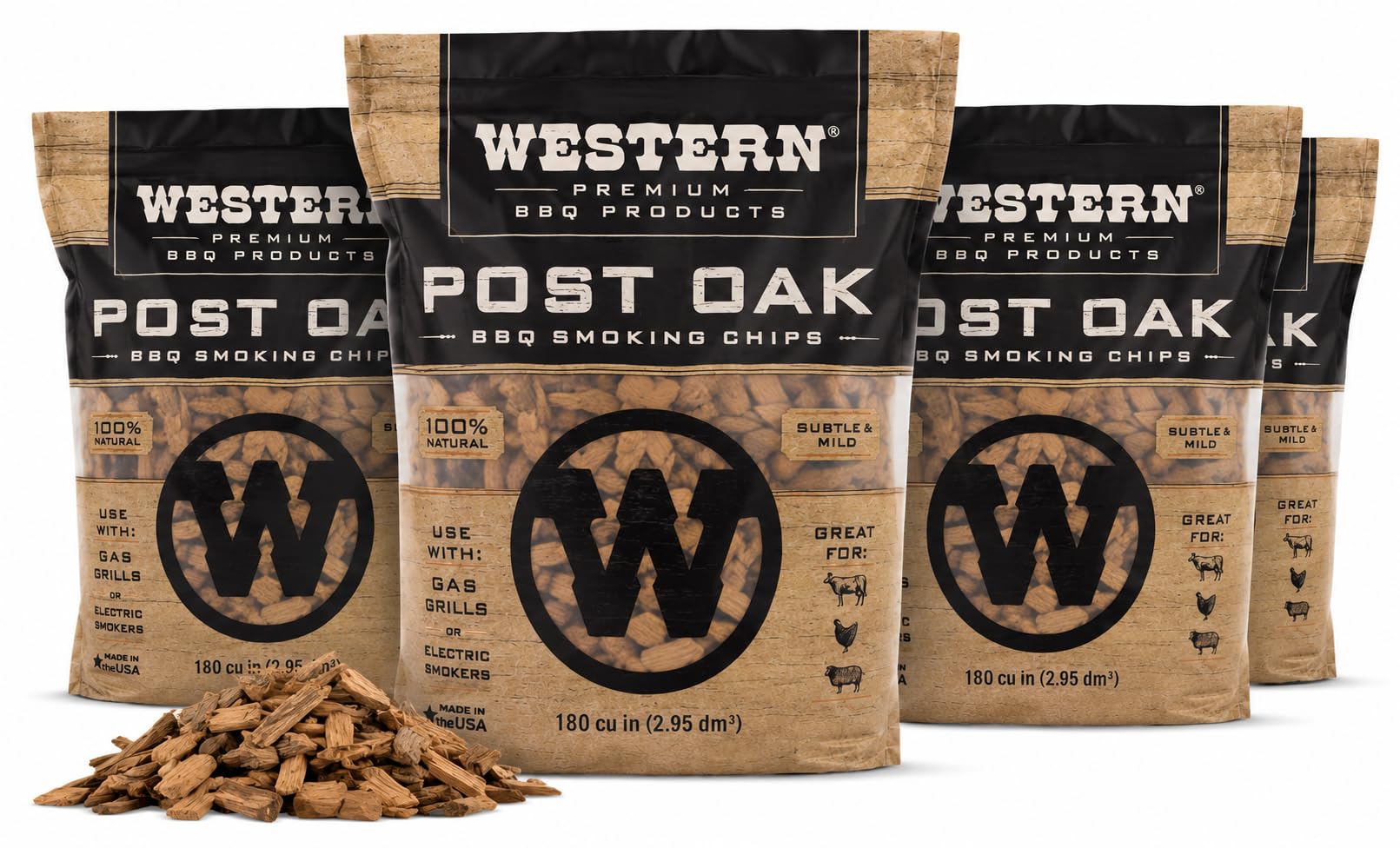
Post oak is the forgiving choice. Its smoke is milder than hickory, so a long jerky smoke stays clean, and it works with every marinade. Western sells it as a 4-pack of chips for gas, charcoal and electric smokers, and it is the most-rated wood on this page (about 4.7 out of 5 from more than 10,000 ratings). Chips burn fast, so add a small handful at a time.
3. Cattleack Post Oak Chunks
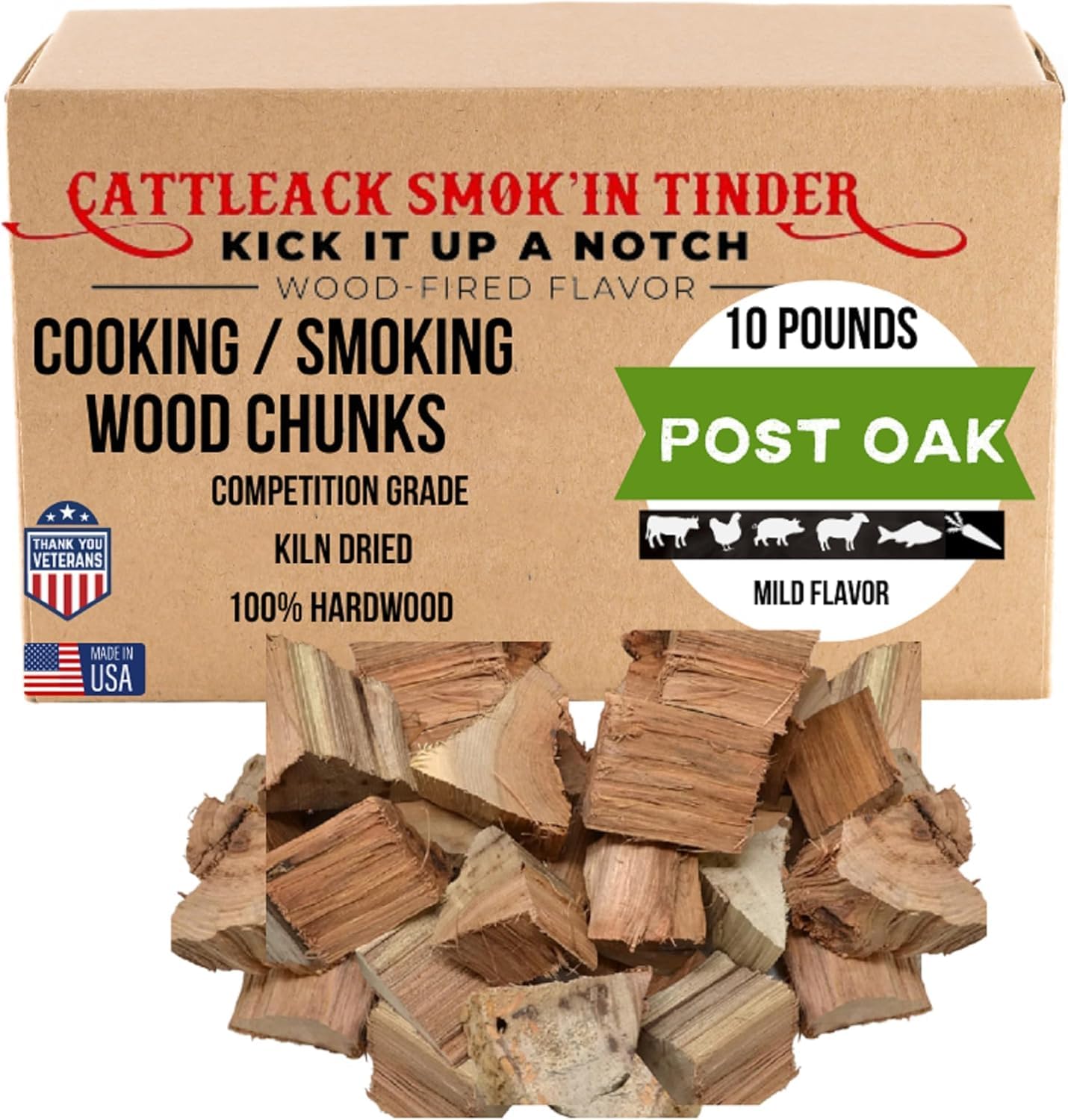
The same wood as chunks, for kettles, kamados and offset smokers where a chunk smolders longer than chips. The 10 lb box holds kiln-dried chunks of about 2 to 3 inches. Buyers rate it about 4.2 out of 5 from fewer than 100 ratings.
4. Camerons Oak Chunks
Kiln-dried oak chunks made in the USA, in an 840 cubic inch box (about 7 to 10 lb, depending on the wood). The listing says no soaking is needed. Buyers rate it about 4.3 out of 5 from under 300 ratings. A good choice if you smoke on charcoal and want a neutral wood to mix with apple or hickory.
5. Mr. Bar-B-Q Chips 3-Pack
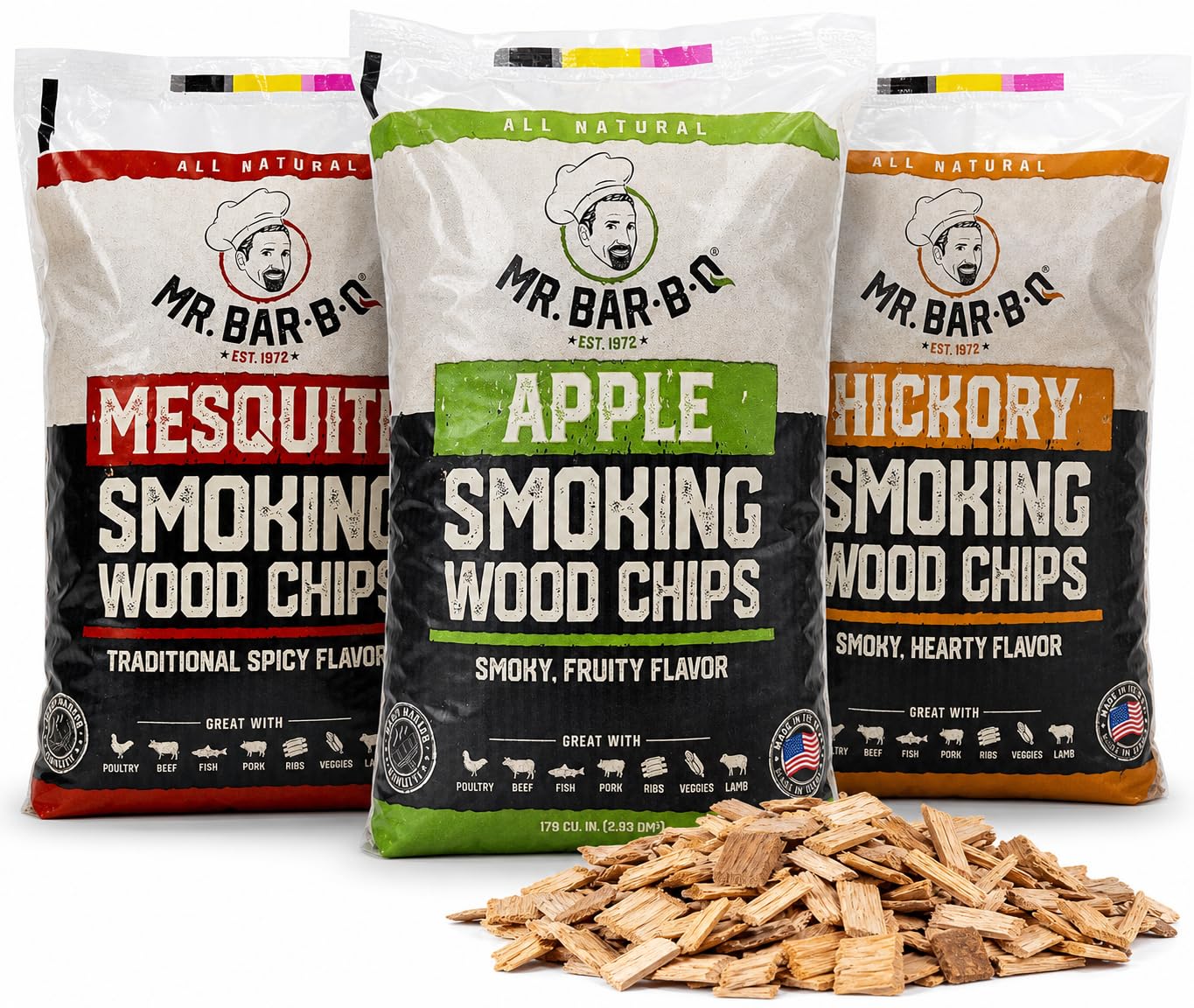
Three 1.8 lb bags of chips, which makes it an easy way to try jerky with a sweet wood (apple), the classic (hickory) and a strong one (mesquite) before buying a large box of one. Use the mesquite only mixed in. Rated about 4.7 out of 5 from more than 3,000 ratings.
How to Smoke Beef Jerky, Step by Step
Step 1: Pick the wood for your marinade
Savory and peppery: hickory, or hickory and cherry half and half. Sweet: apple or cherry. Not sure: post oak. Use kiln-dried wood only; green wood makes wet, harsh smoke.
Step 2: Slice and marinate
Use a lean cut such as eye of round, top round or flank and trim off the fat, which turns rancid in storage. Freeze the meat for 30 to 60 minutes so it slices cleanly, then cut strips about 1/4 inch thick: against the grain for a tender bite, with the grain for a chewier one. Marinate in the refrigerator for 8 to 24 hours. Pat the strips dry before they go in the smoker; a wet surface steams instead of taking on smoke.
Step 3: Do not soak the chips
Soaked chips make steam, which slows drying and does not add smoke. Use dry chips and add about half a cup every 45 to 60 minutes, or one chunk at the start and another after about 90 minutes. A foil pouch with a few holes slows chips that burn too fast.
Step 4: Run the smoker at 160 to 175°F
Preheat first. On a kettle, bank the coals to one side and put the strips on the other. Leave the top vent partly open so moisture can escape. Look for thin, pale blue smoke; thick white smoke means the wood is smoldering badly and will make the jerky bitter.
Step 5: Lay the strips out and smoke for 2 to 3 hours
One layer, with space between the strips, so air reaches every side. Keep the smoke going for the first 2 to 3 hours, then stop adding wood and let the smoker finish drying the meat. Flip the strips once about halfway.
Step 6: Make sure the meat reaches 160°F
The USDA's guidance for jerky is to heat beef to 160°F, because a dehydrator or a low smoker can dry the meat before it gets hot enough to kill bacteria. Check the thickest strips with an instant-read thermometer. If your smoker runs too cool to get there, heat the strips to 160°F before drying (some cooks simmer them briefly in the marinade), or follow a tested recipe that finishes the dried strips in a hot oven.
Step 7: Test for doneness, then store
Total time is usually 4 to 6 hours. Done jerky bends and cracks without snapping, and a torn strip shows no moist or shiny center. Let it cool fully before you bag it; warm jerky sweats and goes soft. Kept airtight, it lasts about 1 to 2 weeks at room temperature, longer in the refrigerator or freezer.
Common Mistakes
- Mesquite for the whole smoke. Five hours of mesquite on thin strips tastes harsh. Mix it in or leave it out.
- Too much wood at once. A full tray of chips makes heavy white smoke. Small additions keep it clean.
- Smoke for the whole cook. After 2 to 3 hours the strips have all the smoke they need.
- Wet strips. Pat them dry, or they steam and stay pale.
- Going by the clock. Every smoker runs differently. Check the meat temperature and the bend test.
Frequently Asked Questions
What is the best wood for smoking beef jerky?
Hickory for the classic jerky flavor, post oak if you want a milder smoke that is hard to overdo. Apple and cherry are best with sweet marinades.
Is mesquite good for beef jerky?
Only in small amounts. Mesquite is strong, and over a smoke of several hours it turns bitter on thin meat. Keep it to about one part in four, mixed with oak or apple.
Should I soak wood chips before smoking jerky?
No. Soaked chips make steam, which slows drying. Dry chips added in small amounts give a cleaner smoke.
How long do you smoke beef jerky?
About 4 to 6 hours at 160 to 175°F for 1/4 inch strips, with wood added only for the first 2 to 3 hours. Thickness, humidity and your smoker change the time, so check the meat, not the clock.
What temperature does beef jerky need to reach?
160°F. That is the USDA's guidance for making beef jerky safely, and a low smoker may not get the meat there on its own, so check with a thermometer.
Can I use the same wood for jerky as for brisket?
Yes, the same woods work, but use much less. A thin strip takes on smoke far faster than a thick brisket.
Can I make smoked jerky on a pellet grill?
Yes. Use hickory, oak or a fruit wood pellet and the grill's lowest setting, or add a pellet smoke tube for more smoke at low heat. Wood chips and chunks are for charcoal, offset, electric and gas smokers.
Related Reading
Get Weekly BBQ Tips from CharredPicks
No spam. Just one email a week with grilling tips, recipes, and gear deals.