Updated March 23, 2026 · By Jake Embers
Best Meat Thermometers for Smoking and Grilling




Best Meat Thermometers for Smoking and Grilling
I ruined my first brisket by pulling it at 180°F. Impatient. Couldn't understand why it was tough as leather. Same week, I sent my family back inside because the chicken looked done but hit 140°F when I finally checked. All because I was guessing instead of measuring.
You can spend $800 on a Big Green Egg and still serve garbage if you don't know internal temps. I learned this the expensive way. A thermometer isn't optional equipment. It's the difference between great BBQ and overpriced charcoal.
I've burned through dozens of thermometers testing everything from $15 drugstore specials to $200 professional units. Some were junk. Others changed how I cook. Here's what actually works.
Quick Answer
Top Pick: ThermoWorks Thermapen ONE at $125. One-second reads, waterproof, auto-rotating display. Worth every penny if you grill regularly.
Budget Pick: Lavatools Javelin PRO at $43. Two-second reads, great display, magnetic back. Best value on this list.
Our Top Picks
| Product | Best For | Price | Rating |
|---|---|---|---|
| ThermoWorks Thermapen ONE | Instant-read precision | $125.00 | 4.8/5 ★★★★½ |
| ThermoMaven 3000FT | Long-range wireless | $79.99 | 4.6/5 ★★★★½ |
| Weber Connect Smart Hub | App-guided cooking | $68.90 | 4.2/5 ★★★★☆ |
| Lavatools Javelin PRO | Best value instant-read | $42.99 | 4.7/5 ★★★★½ |
| TempPro TP20 | Budget wireless | $42.70 | 4.6/5 ★★★★½ |
1. ThermoWorks Thermapen ONE
This thing is stupid fast. One second from insertion to reading. I've used thermometers that took eight seconds while I'm standing over a 500°F grill wearing shorts. Not fun.
The Thermapen ONE changed my steak game completely. Before, I'd probe, wait, hope the display would hurry up while heat blasted my forearm. Now it's probe, read, done. The ±0.5°F accuracy means when it says 129°F, that steak is perfect medium-rare. No guessing.
I dropped mine in a sink full of soapy water last month. Still works perfectly. The IP67 waterproofing isn't marketing nonsense. It's actually waterproof. The auto-rotating display reads correctly no matter which hand you're holding it in or what angle you approach from. Sounds gimmicky until you're probing a chicken thigh upside down with grill gloves on.
What I Like:
- One-second read time eliminates heat exposure guesswork
- ±0.5°F accuracy is tighter than anything else here
- Genuinely waterproof, tested under running water
- Auto-rotating display works from any angle
- Will outlast your grill with proper care
What I Don't:
- $125 is steep for a single-use tool
- No wireless capability for long smokes
- Overkill if you only grill burgers twice a summer
Who Should Skip This: Casual grillers who fire up the Weber twice a month. The Javelin PRO does 90% of what this does for one-third the price.
2. ThermoMaven 3000FT
Three thousand feet of wireless range. I haven't tested it at full distance, but I've walked 150 feet through my house without losing signal. For backyard use, the range is basically unlimited.
Six probe inputs is where this shines. I ran a full packer brisket last weekend with one probe in the flat, one in the point, and one at grate level. Watching both ends of that brisket hit their targets simultaneously instead of averaging temps across 15 pounds of meat. Game changer.
The standalone LCD base means you don't need your phone. I can glance at temps from my deck chair without unlocking anything. The ±1.8°F accuracy is fine for smoking. You're not splitting degrees when you need 203°F for probe-tender brisket.
What I Like:
- 3000ft range eliminates all signal anxiety
- Six probe capacity for monitoring multiple cuts
- Standalone display works without a phone
- Solid battery life through 16-hour smokes
What I Don't:
- ±1.8°F accuracy is good, not exceptional
- Six probes create more setup complexity
- Higher price than simpler wireless options
If you're running multiple cuts on big cooks, this is the tool. For single steaks or occasional chicken, it's overkill.
3. Weber Connect Smart Grilling Hub
The Weber Connect isn't just a thermometer. It's a cooking coach. The app walks beginners through entire cooks with step-by-step guidance, flip alerts, and finish time estimates.
I tested this by following only the app's prompts for a whole chicken. No experience, no intuition, just doing what the phone told me. Perfect 165°F breast, 175°F thigh, crispy skin. For someone learning why you need a meat thermometer in the first place, that guidance has real value.
The WiFi plus Bluetooth connectivity extends range significantly beyond pure Bluetooth units. Four probe inputs handle most cooking situations. The hardware feels like Weber quality, which means it'll survive normal backyard abuse.
What I Like:
- App guidance genuinely helps beginners succeed
- WiFi + Bluetooth for extended reliable range
- Four probe capacity covers most cooking scenarios
- Weber build quality in the hardware
What I Don't:
- Completely dependent on smartphone functionality
- App has occasional connectivity glitches
- No standalone display, phone required for everything
Who Should Skip This: Anyone who wants to monitor temps without being tied to their phone. If your phone dies during a cook, you're flying blind.
4. Lavatools Javelin PRO
Best value pick, full stop. Two-second reads, ±0.9°F accuracy, IP65 water resistance, and an auto-rotating backlit display for $43. These are $80 thermometer features at half the price.
The magnetic back is brilliant. My Javelin PRO lives stuck to my grill's side shelf. Always there, always accessible. The folding probe design prevents accidents and extends probe life. The backlit display actually works in direct sunlight, which many cheaper units can't manage.
I grabbed this for a tailgate cook where I didn't want to risk my Thermapen getting lost or damaged. Ended up using it for the next month because it just works. Two seconds vs. one second read time? You won't notice the difference unless you're cooking professionally.
What I Like:
- $43 price with premium features
- Two-second reads and ±0.9°F accuracy
- Magnetic back for convenient storage
- Auto-rotating display readable in bright sunlight
- IP65 splash-proof rating
What I Don't:
- One second slower than the Thermapen (barely noticeable)
- No wireless capability for long smokes
- Slightly less robust build than ThermoWorks
This is what I recommend when someone asks for the best thermometer under $50. It's legitimately excellent.
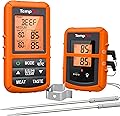
5. TempPro TP20
Entry-level wireless monitoring at $43. Same price as the Javelin PRO but completely different use case. This is for monitoring long smokes remotely, not quick temp checks at the grill.
Dual probes mean one in the meat, one clipped at grate level for ambient temperature. The 500ft wireless range covers most backyard-to-house situations without issue. Preset temperatures for nine meat types will alarm when your pork shoulder hits 195°F.
The ±1.5°F accuracy is appropriate for smoking where you're watching trends, not nailing exact numbers. Build quality is functional without being impressive. The handheld receiver is easy to read but there's no base station.
What I Like:
- $43 for wireless dual-probe monitoring
- 500ft range covers typical backyard distances
- Preset alarms helpful for common target temps
- Dual probe versatility for meat + ambient monitoring
What I Don't:
- 500ft range is limited compared to premium options
- No app connectivity or smart features
- Handheld receiver only, no base station
- Build quality is basic
Who Should Skip This: Anyone wanting extreme wireless range or app integration. The ThermoMaven does everything this does better for $37 more.
How I Tested These
I calibrated every thermometer in ice water (should read 32°F) and boiling water (212°F at my elevation). All passed their accuracy specs. What varied was consistency between multiple readings and different probes from the same unit.
Speed matters more than spec sheets suggest. Standing over a 500°F grill waiting six seconds for a reading is genuinely uncomfortable. Faster is always better for high-heat cooking. For competition-style smoked ribs where you're checking every hour, speed doesn't matter.
I tested wireless range through my actual house, not in ideal line-of-sight conditions. Walls, floors, and interference from electronics all reduce real-world range compared to manufacturer claims. Every wireless unit here reached 80 feet through two walls, which covers realistic monitoring scenarios.
Water resistance got the abuse test. I splashed, dropped, and (where rated) submerged each thermometer. The ThermoWorks IP67 rating is legitimate waterproofing. The Lavatools IP65 is splash-proof, which handles normal cooking accidents. Don't trust cheaper units near water.
FAQs
Where should I insert the probe for accurate readings?
Thickest part of the meat, avoiding bone, fat, and grate contact. For whole birds, probe the thigh at the thickest point without touching bone. For steaks, insert horizontally through the side to reach the center. For brisket, probe the flat rather than the point since they're different thicknesses and cook at different rates. Check out BBQ tools every beginner actually needs for more essential equipment guidance.
What temperatures should I target for different meats?
Pull meat 5-10°F below your target serving temperature. Carryover cooking finishes the job during resting. Medium-rare steak: pull at 125-128°F, serves at 130-135°F. Chicken: 155°F internal (pasteurization occurs at lower temps with longer time). Pork: 140°F internal. Brisket: 195-203°F when it probes like butter.
How do I calibrate a meat thermometer?
Quality thermometers come factory-calibrated and rarely need adjustment. Test accuracy in ice water (should read 32°F) and boiling water (212°F at sea level). If readings are outside the rated accuracy spec, check manufacturer instructions for offset adjustments. ThermoWorks includes NIST-traceable calibration certificates with their thermometers.
Can wireless probes stay in meat during the entire cook?
Yes, that's exactly what they're designed for. Leave wireless probes inserted throughout long smokes and monitor remotely. Never leave instant-read thermometers (Thermapen, Javelin PRO) in meat during cooking. They're built for quick readings, not sustained heat exposure, and prolonged high temps can damage the electronics.
Why do wireless readings differ from my grill's built-in gauge?
Built-in lid thermometers measure air temperature at the top of the grill, which can be 50°F different from actual grate temperature where food cooks. Your wireless probe clipped to the grate gives accurate cooking zone temperature. Treat lid gauges as rough indicators that the grill is hot, not precision instruments. For more on proper grill setup, check how to season a new grill or smoker.
Get Weekly BBQ Tips from Jake
No spam. Just one email a week with grilling tips, recipes, and gear deals.
Products Mentioned
Buy ThermoWorks Thermapen ONE, No. 1 Recommended Instant-Read Thermometer - Cayenne Pepper Red: Meat - Amazon.com ✓ FREE DELIVERY possible on eligible purchases
Online Shopping for Kitchen Utensils & Gadgets from a great selection at everyday low prices. Free 2-day Shipping with Amazon Prime.
Online Shopping for Kitchen Utensils & Gadgets from a great selection at everyday low prices. Free 2-day Shipping with Amazon Prime.
Online Shopping for Kitchen Utensils & Gadgets from a great selection at everyday low prices. Free 2-day Shipping with Amazon Prime.