Updated March 21, 2026 · By Jake Embers
Best Charcoal Chimney Starters


Best Charcoal Chimney Starters
My first charcoal grill came with a bag of charcoal, a lighter, and absolutely no guidance. So I did what any reasonable beginner does: I piled the charcoal in a pyramid, soaked it in lighter fluid, and lit it. The result was a chemical-smelling fire that took forever to die down to cooking temperature, left lighter fluid taste on my burgers, and made me wonder if charcoal was even worth the effort.
It wasn't until a neighbor handed me a chimney starter at a block party that everything changed. Newspaper, charcoal, one match, fifteen minutes. Evenly lit, no chemicals, ready to cook. The chimney starter is the most important tool in charcoal grilling that nobody tells you about when you're starting out.
I've tested five different chimney starters over multiple seasons, running everything from quick weeknight cooks to all-day low-and-slow burns. Here's what I've learned, including one major mistake I made with the Napoleon that cost me a perfectly good grilled steak with chimichurri.
Quick Answer
Top Pick: Oklahoma Joe's Halftime XL - $35 - XL capacity, fast lighting, built like it'll last a decade. Worth every penny if you grill regularly.
Budget Pick: Weber Rapidfire Chimney Starter - $13 - The most popular chimney starter in the world for a reason. It works, it's cheap, and it'll outlast most grills.
Our Top Picks
| Product | Best For | Price | Rating |
|---|---|---|---|
| Weber Rapidfire | Beginners, everyday use | $12.98 | 4.8/5 ★★★★½ |
| Char-Griller Chimney Starter | Quick release convenience | $21.81 | 4.5/5 ★★★★½ |
| Napoleon JETFIRE | Portability, compact storage | $26.49 | 4.1/5 ★★★★☆ |
| E500 Larger Chimney Starter | Big cooks, bundled fire starters | $32.99 | 4.7/5 ★★★★½ |
| Oklahoma Joe's Halftime XL | XL capacity, speed | $34.99 | 4.8/5 ★★★★½ |
1. Weber Rapidfire Chimney Starter - The Classic
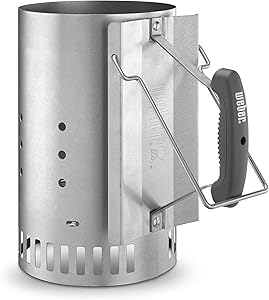
There's a reason this is the default recommendation everywhere.
It costs $12.98, it works every single time, and it's built from aluminized steel that resists rust even when you're not careful about storing it. I've owned mine for three seasons with no signs of retirement. The design is classic and intentional: wide cylinder, perforated bottom plate for airflow, and a heat shield on the handle that actually works.
Stuff newspaper underneath, light it, walk away for fifteen minutes. When the top coals show gray ash, you're ready. What I appreciate most is the consistency - every time I use it, I get the same result. That predictability means I can time my cooks accurately, which makes everything from competition-style smoked ribs to weeknight grilling go smoothly.
The 28,348 reviews averaging 4.8 stars tell the real story here. This thing just works.
What I Like:
- $12.98 removes every reason not to own one
- Aluminized steel genuinely resists corrosion
- Consistent, reliable lighting every time
- Heat shield handle saves your knuckles
What I Don't:
- Smaller capacity than XL options
- No quick-release mechanism - you tilt and pour
Who it's for: Every person who grills with charcoal. Start here, upgrade later if needed.
2. Char-Griller Charcoal Grill Chimney Starter - The Quick Release

The headline feature is the quick-release trigger, and it delivers exactly what it promises.
Instead of tilting the entire chimney and trying to control a cascade of 700°F coals, you pull a lever and the bottom drops open. This gives you precise coal placement, which matters more than you'd think when you're setting up a two-zone fire or trying to get coals exactly where you want them in a kettle.
At 12 inches it's taller than the Weber, which means larger capacity - good for bigger kettle grills or when you need a full chimney's worth on one side. Build quality feels solid and the handle ergonomics are comfortable even with heat-resistant BBQ gloves.
The $21.81 price is fair for what you get. My only hesitation is that the trigger mechanism adds a moving part, and moving parts can eventually fail. So far mine has been trouble-free through two seasons.
What I Like:
- Quick-release trigger gives precise coal placement
- 12-inch height means larger capacity
- Solid build quality at a reasonable price
- 4.5/5 rating from 1,293 reviews backs up performance
What I Don't:
- Moving parts add potential failure point
- $9 more than the Weber for a convenience feature
Who it's for: Intermediate grillers who want more control over coal placement and don't mind paying extra for it.
3. Napoleon JETFIRE Charcoal Chimney Starter - The Compact

The Napoleon is the chimney for people who care about storage space.
It's collapsible - the handles fold down to a compact profile that fits in a drawer or cabinet. If you're grilling on a balcony, camping, or working with limited space, that collapsibility is genuinely useful. The stainless steel construction is a step up in corrosion resistance too.
But here's where I made a mistake: I assumed the collapsible design meant it wasn't as robust. Wrong. I was rushing to get coals ready for a beer can chicken cook and didn't fully extend the handles. When I went to pour, the partially collapsed handle shifted and I dumped hot coals everywhere except where I wanted them. User error, but it taught me to double-check the setup.
The tradeoff is capacity, which runs smaller than the E500 or Oklahoma Joe's. For smaller grills it's fine, but large cooks might leave you wanting more charcoal.
What I Like:
- Collapsible design makes storage easy
- Stainless steel for long-term durability
- Great for travel, camping, or small spaces
- Quality construction throughout
What I Don't:
- Smaller capacity limits it for large cooks
- 4.1/5 rating is lowest here for a reason
- Collapsible mechanism requires attention to setup
Who it's for: Balcony grillers, campers, or anyone who prioritizes easy storage over maximum capacity.
Who should skip this: If you regularly cook for more than 4 people or have plenty of storage space, the extra capacity elsewhere is worth more than the collapsible feature.
4. E500 Larger Chimney Starter - The Bundle Deal

The E500 takes a different approach by including 60 charcoal starter cubes.
That's roughly a full season of fire starter supply for a weekend griller, eliminating the "I need newspaper but don't have newspaper" problem that's killed many a spontaneous grilling session. The chimney itself is oversized - noticeably larger than the Weber or Char-Griller - which handles bigger cooks without needing a second batch of coals.
I tested this during a backyard party where I was making burnt ends Kansas City style alongside regular burgers and dogs. The extra capacity meant I could get everything going at once instead of managing multiple chimney loads. That convenience is worth real money when you're cooking for a crowd.
At $32.99 the price-per-cook math works well when you factor in the included fire starters. My one note: the larger diameter means slightly longer heat-up time - allow an extra 3-4 minutes compared to standard chimneys.
What I Like:
- Includes 60 fire starters worth about $15
- Oversized capacity handles big cooks in one load
- 4.7/5 rating reflects real user satisfaction
- Good value with included accessories
What I Don't:
- Slightly longer heat-up time due to larger diameter
- Takes up more storage space
- No quick-release feature
Who it's for: High-frequency grillers who cook for groups, or anyone who wants the convenience of bundled fire starters.
5. Oklahoma Joe's Halftime XL - The Beast

This is the chimney I reach for when a cook really matters.
XL capacity, fast lighting design, and construction that feels made to survive decades of abuse. The Halftime XL earns its 4.8/5 rating by doing everything right without compromise. The fast-lighting design uses strategic ventilation that channels airflow more aggressively than standard chimneys.
Real-world difference? Coals ready in under 12 minutes when conditions are right, compared to 15-18 minutes for others. For a weekend cook where you're managing the perfect dry rub for ribs, prepping sides, and entertaining guests, getting those minutes back actually matters.
At $34.99 it's only $2 more than the E500 but a clear step above in both capacity and speed. If you're committed to charcoal and grill regularly, this is the investment that pays off. I've used mine for everything from quick weeknight cooks to all-day smoking sessions.
What I Like:
- XL capacity handles the largest residential grills
- Fast lighting design genuinely reduces wait time
- 4.8/5 rating ties Weber for top satisfaction
- Built for heavy, regular use
- Premium construction throughout
What I Don't:
- $34.99 is premium pricing for a chimney starter
- Large size requires adequate storage space
Who it's for: Serious charcoal grillers who cook regularly and want the best chimney without compromise.
How We Tested
Every chimney here uses the same basic mechanism - heat rises, creates a draft, lights coals from the bottom up without chemicals. The differences are in capacity, speed, construction quality, and convenience features.
I ran each through at least five lighting sessions using Kingsford Blue briquettes, same newspaper technique, similar weather conditions. Capacity matters more than people expect - a chimney that holds only 80% of what your grill needs means you're either underpowered or running a second batch. Speed differences were real but modest; the fastest beat the slowest by about 4 minutes.
Construction and capacity turned out to be bigger differentiators than raw lighting speed. That's why the Weber and Oklahoma Joe's tie at the top despite different price points.
FAQs
Do I need lighter fluid if I have a chimney starter?
No. That's the whole point.
A chimney uses newspaper or a fire starter cube to light from the bottom, with airflow doing all the work. This eliminates the chemical taste lighter fluid leaves on food, plus it's safer and more predictable. Once you use a chimney, lighter fluid feels like using a sledgehammer to hang pictures.
How do I know when the coals are ready?
The top layer should show gray ash around the edges and glow orange in the center. If they're still black on top, give it another 3-5 minutes. Don't rush this - properly heated coals make all the difference in cooking performance.
How much charcoal does a standard chimney hold?
The Weber holds about 100 briquettes, which is enough for a standard 22-inch kettle for direct cooking. XL options like the Oklahoma Joe's hold significantly more - useful for larger grills or when you need a really hot fire for searing.
Can I use lump charcoal instead of briquettes?
Yes, and it actually lights faster because the irregular shapes create better airflow through the chimney. The process is identical - just expect it to be ready a few minutes sooner than briquettes.
How should I maintain and store my chimney starter?
Let it cool completely before storing. Dump any ash, give it a good knock to remove debris, and store somewhere dry. The aluminized steel models like the Weber can handle some moisture, but keeping tools dry extends their life significantly. Same principle applies to how to clean and maintain your grill.
Get Weekly BBQ Tips from Jake
No spam. Just one email a week with grilling tips, recipes, and gear deals.
Products Mentioned